Getting Started with Measured Skills
Choose one workflow, try it on a real task, and check what your assistant actually used.
Jovani Pink · Software, ideas, and the work between
My work spans data and AI, interactive systems, and the decisions behind them. I lead Measured Studios, where I consult and develop products.
A little more about meChoose one workflow, try it on a real task, and check what your assistant actually used.
A fixture-backed comparison that holds the BLS source, transformations, K-means settings, and acceptance criteria constant, then asks what Elixir and Python make easier to inspect and trust.
A practical operating model for conversation: manage shared attention, lower the cost of joining and leaving, treat body language as uncertain evidence, and keep warmth from becoming manipulation.
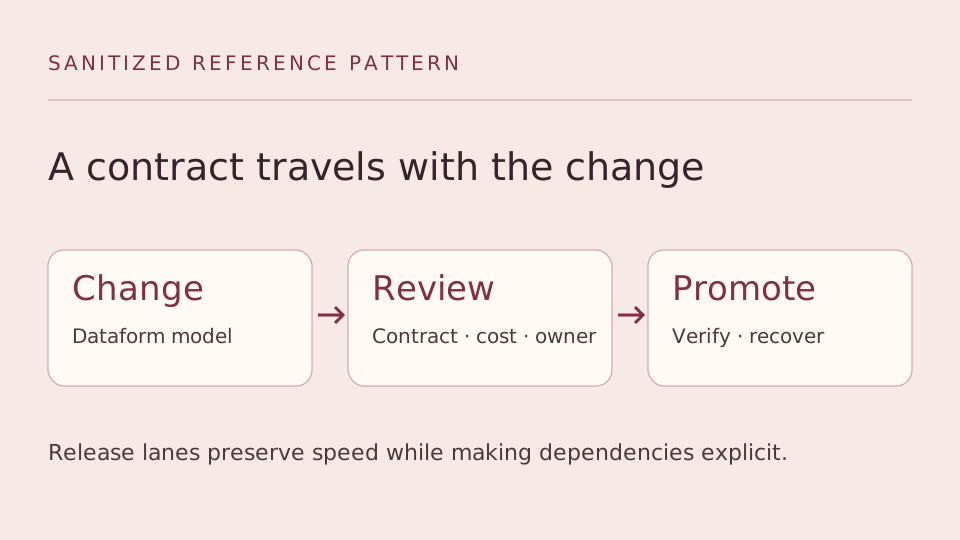
I designed a release pattern that brings data contracts, cost checks, ownership, and rollback into one promotion path.
Sanitized reference pattern; no measured customer outcome.
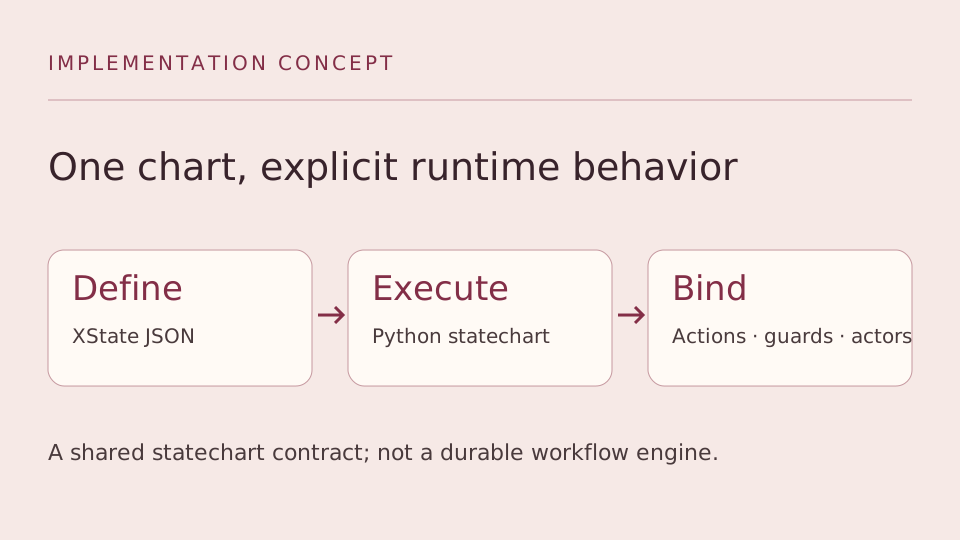
I implement and contribute Python statechart semantics, actors, and XState-compatible workflow definitions.
Evolving prototype; not a durable workflow engine.

I lead and implement an interactive story exploring narrative state, choice, and small acts of care.
Public story prototype; not a finished commercial game.
At the studio
Review warehouse model changes with requirements, validation, and cost evidence together.
Public product preview. SaaS and warehouse integrations are in development.
Inspect whether a high-value CRM outcome is supported by the associated call evidence.
In development. Export-based evaluation is the starting point; SaaS is not generally available.
Turn a week of recipes into a meal plan and a practical shopping checklist.
Web and iOS implementations in development. Local storage; no cross-device sync.
Explore public signals through a fictional zombie lens, with inspectable sources.
Web and iOS prototypes. The Z-Index is not a probability or emergency alert. Readiness tools are future work.
AI can shorten implementation without shortening discovery. This essay gets the center of Domain-Driven Design right: the valuable part is not a diagram, a document, or a fashionable folder...
My notesThe strongest idea here is progressive hardening. Context documents tell an agent what the team believes, review agents catch violations that still require judgment, and deterministic...
My notesAs code becomes cheaper to produce, unowned complexity becomes more expensive. This essay grounds that claim in the decisions that syntax cannot settle by itself: consistency, retries,...
My notesFrom an idea to useful software
I help teams assess a data or AI workflow through a bounded readiness engagement, followed by a production pilot when the evidence supports it.
Discuss your workflow